Case study · Professional training & development · Saudi Arabia · 2017 — 2026
From Manual Operations to an Organized Digital Platform
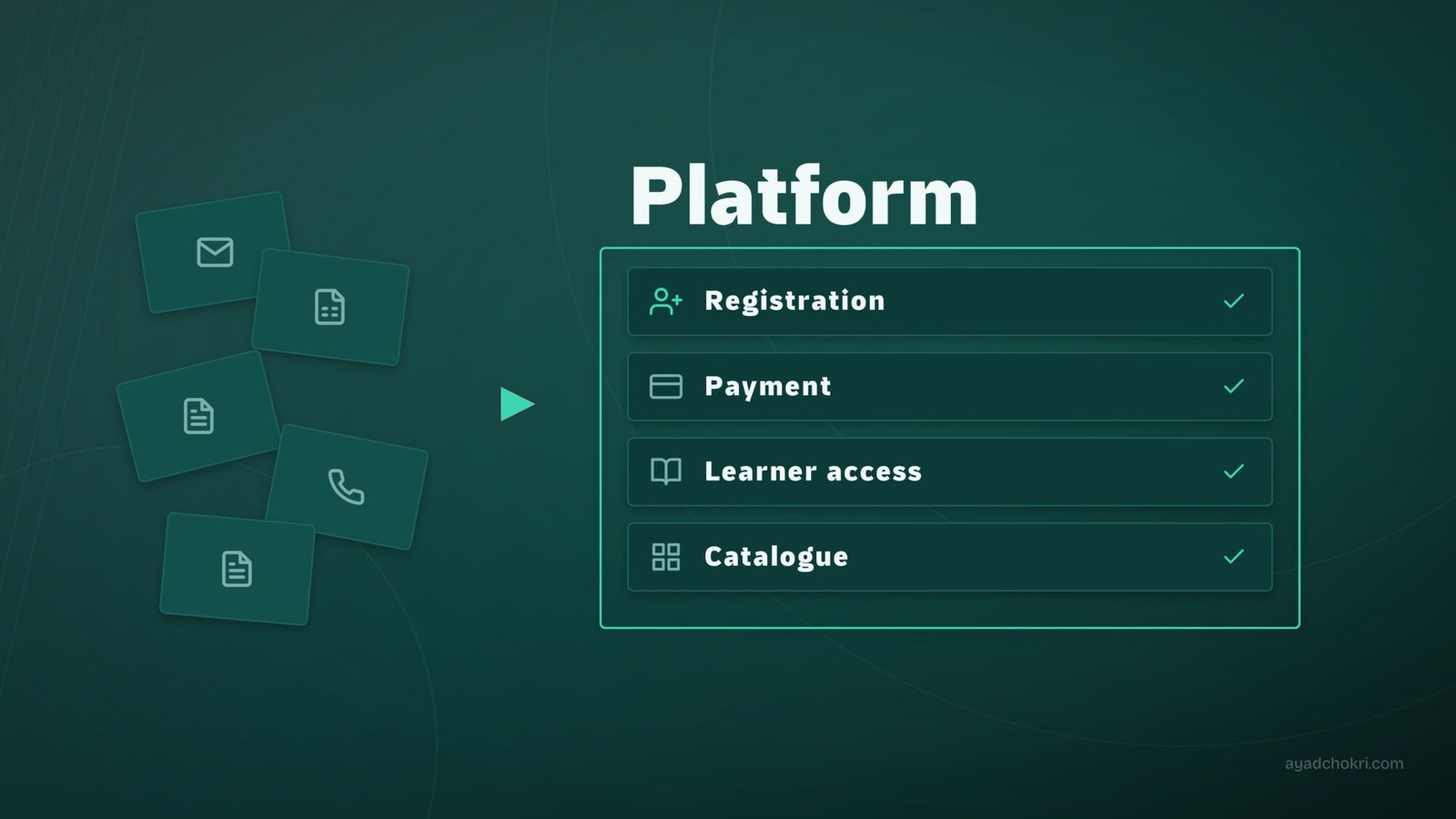
A professional training organization moved from fragmented manual operations to a structured digital platform for managing content, registrations, user accounts, visitor activity, and day-to-day operations.
Client identity and visual materials are kept confidential. Selected visuals are presented for illustrative purposes only.
01 — Context
A professional training organization offering programs in operations management, data science, organizational excellence, innovation, strategy, and technology governance. It serves corporate clients and individuals, works with internal training groups and external trainers, and continuously expands its training portfolio.
The programs were strong, but much of the work behind them was still manual. The goal was to turn this fragmented operation into a structured digital platform, covering website management, information architecture, user accounts, registrations, visitor tracking, content management, and day-to-day operations.
02 — The problem
Registration started with an email. An employee would read it, respond, add the participant to a spreadsheet, follow up on payment, and later send attendance details. Every step depended on someone, and much of the process lived in the employee’s memory rather than in the system.
Adding a new course or trainer often meant going back to the person who knew how the website was managed. As the training portfolio grew, there was also a growing risk that the website would show information that no longer matched what the organization actually offered.
The problem was not simply the time spent on manual work. The process itself was not transferable. If the person who knew the workflow was absent, it became difficult to understand the status of registrations or what needed to happen next.
03 — What I did
I started by understanding the actual process before redesigning the platform. I followed one registration from the initial contact through to the participant’s attendance, documenting the steps, information, files, messages, and handoffs involved. This created a clear picture of how the work actually happened rather than how it was supposed to happen.
I then reorganized the platform around the different user journeys. Individual participants, companies registering groups, trainers, and the internal team had different needs, so they could no longer be treated as one generic workflow.
I structured registration and its related information into a clearer process covering user details, registration status, payment, and attendance. I also organized the content and operational processes so the team could manage the work from a more centralized system.
The content management structure was also redesigned so the team could add courses and trainers and update schedules, pricing, and program details without relying on a technical person for every change.
The platform also included structured user accounts, visitor tracking, website architecture, and content management, bringing the digital system closer to the organization’s actual way of working and making it easier for the team to maintain as the training portfolio grew.
04 — Result
The operation became more structured and transferable. Registrations and key information were no longer dependent on one person or scattered across emails, spreadsheets, and personal knowledge.
The team could manage courses, trainers, content, and updates through the platform, while the website more accurately reflected the organization’s current training portfolio.
More importantly, documenting the process made previously informal practices visible. Parts of the operation moved from undocumented habits and personal knowledge into a system the team could understand, manage, and continue to develop.
Start a Project
Have a project in mind? Let's talk about what you need.
Whether you are defining a new digital product, improving an existing experience, building a website, or need support with a specific digital project, send me a brief overview and I'll suggest the best way forward.
A short brief is enough to start. I'll get back to you within two working days.
Direct
What happens next
- I read the brief and reply within two working days
- A 30-minute call to understand the situation
- A written proposal with scope and a fixed price